The US and Europe held. Britain raised rates. The minutes give three reasons
The Bank of England raised its rate to 4% on November 5. The US and the euro area held rates a week earlier. We follow the official documents to see the reasons the Bank gave, and when British households will feel it.
01A 40% jump at the pump moved rates
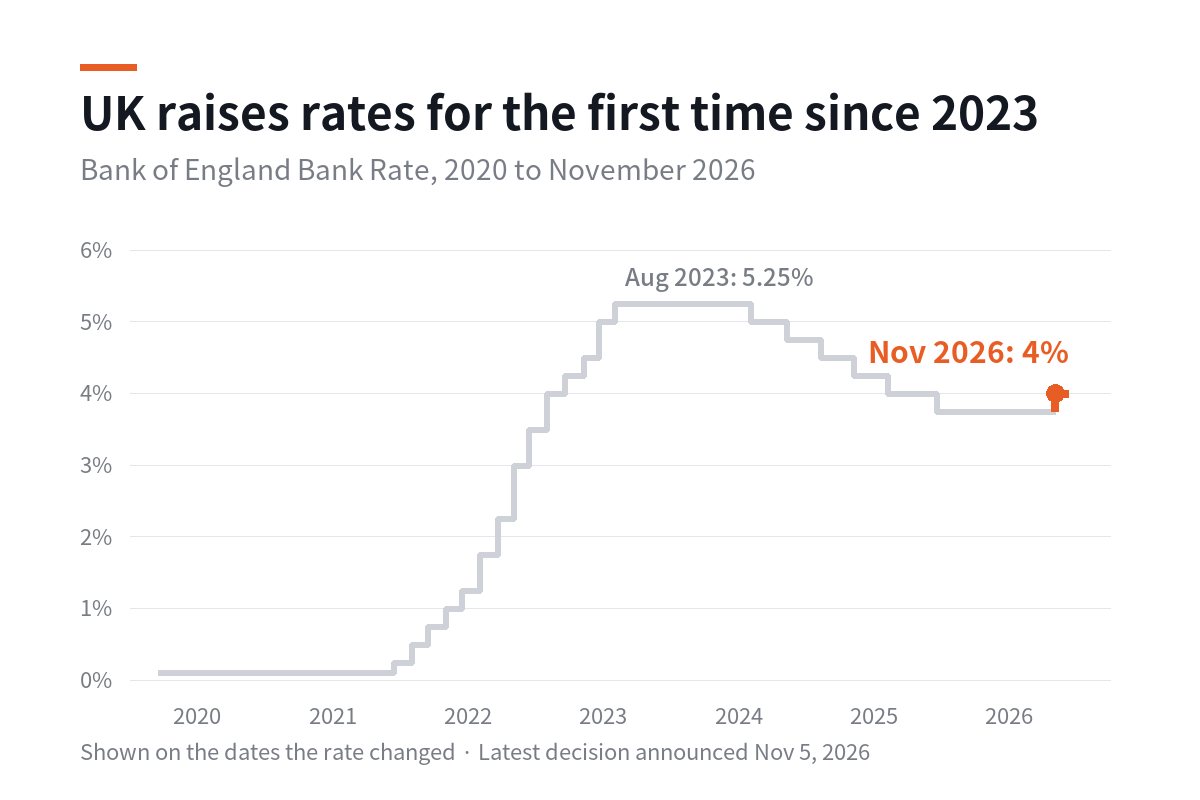
Diesel at British pumps costs about 40% more than before the conflict in the Middle East began, and petrol about 30% more. On November 5, the Bank of England raised Bank Rate by 0.25 percentage points, from 3.75% to 4%. It was the first rise since August 2023.
Eight of the nine members of the Monetary Policy Committee voted for the quarter-point rise. Catherine Mann voted against, wanting a half-point rise to act before inflation became entrenched. The Bank had cut to 3.75% last December and held there for more than ten months.
02Fuel and gas bills pushed inflation up
UK consumer price inflation rose from 2.6% in June to 3.5% in September. Around 60% of the overshoot above the 2% target came from household electricity and gas bills and motor fuel. Services prices made up most of the rest.
Energy prices climbed beyond what the Bank expected in July. Over the 15 working days to October 27, Brent crude futures averaged $108 a barrel, 38% higher than at the time of the July report. UK gas futures were 81% higher. The Bank expects inflation to reach about 4.5% in the first quarter of next year and about 5% in the second, then fall back to the 2% target in 2028. It estimates that new measures in the government's late-October Budget will take a quarter of a percentage point off inflation by the second quarter of next year.
03Europe waited. Britain moved
In the same period, the US and the euro area held rates. On October 29, the European Central Bank kept its deposit rate at 2.50%. It said energy prices kept rising, but underlying inflation had stayed broadly stable and wages had not yet responded in a material way. On October 28, the US Federal Reserve kept its target range at 3.75% to 4%. Two members wanted a quarter-point rise.
The Bank of England's minutes set out Britain's own conditions. The economy was stronger than expected: growth was 0.5% in the second quarter and an estimated 0.7% in the third, well above the 0.3% and 0.1% the Bank had projected in July. Unemployment fell to 4.7% in the three months to August, lower than the July projection. Many measures of underlying inflation, which had been falling before the energy shock, stopped falling. The minutes also noted that households and firms now pay closer attention to inflation news than in the past. When people expect prices to keep rising, that expectation slips easily into pay deals and price tags. The committee judged this risk had grown since September.
042022 again, or 2011?
Britain's last energy shock is recent. From December 2021 to August 2023, the Bank raised rates 14 times, from 0.1% to 5.25%. Back then, higher energy costs spread fast and wide into other prices and wages.
This time, the Bank's report finds that prices most sensitive to oil are moving more like 2011 than 2022. In 2011, energy prices rose without spilling much into other prices. According to the minutes, many firms are absorbing costs by taking thinner margins, and some have not yet seen big gas or electricity rises because of hedging or long-term fixed contracts. The committee thinks most of these buffers will not last.
Members differed on whether this rise is a one-off. Alan Taylor called it a 'one-for-now' insurance hike, not the start of a hiking cycle. Huw Pill said a single quarter-point rise was unlikely to be enough. Megan Greene, Clare Lombardelli and Governor Andrew Bailey also said a further rise could be needed soon, depending on the evidence. The committee said policy is not on a pre-set path.
05When British households feel it
Household energy bills follow with a lag. The price cap set by the energy regulator Ofgem rose from £1,477 in the second quarter to £1,723 in the fourth. It is expected to reach about £2,150 in the first quarter of next year, about 46% above the second-quarter level.
Borrowing costs have already moved. Benchmark two-year fixed mortgage rates have risen by nearly half a percentage point since early September. Mortgage approvals for house purchases in July to September fell 8% from the previous three months, and the monthly figure hit its lowest since 2023. The Bank expects real household incomes to fall in the coming quarters.
The next rate decision is on December 17. In the Bank's survey of market participants, the median expectation was 4.25% by February.