The regular-season winner almost never loses the Korean Series... But this year was different
In 35 seasons, the top team lost only five times. Samsung just made it six.
01What happened
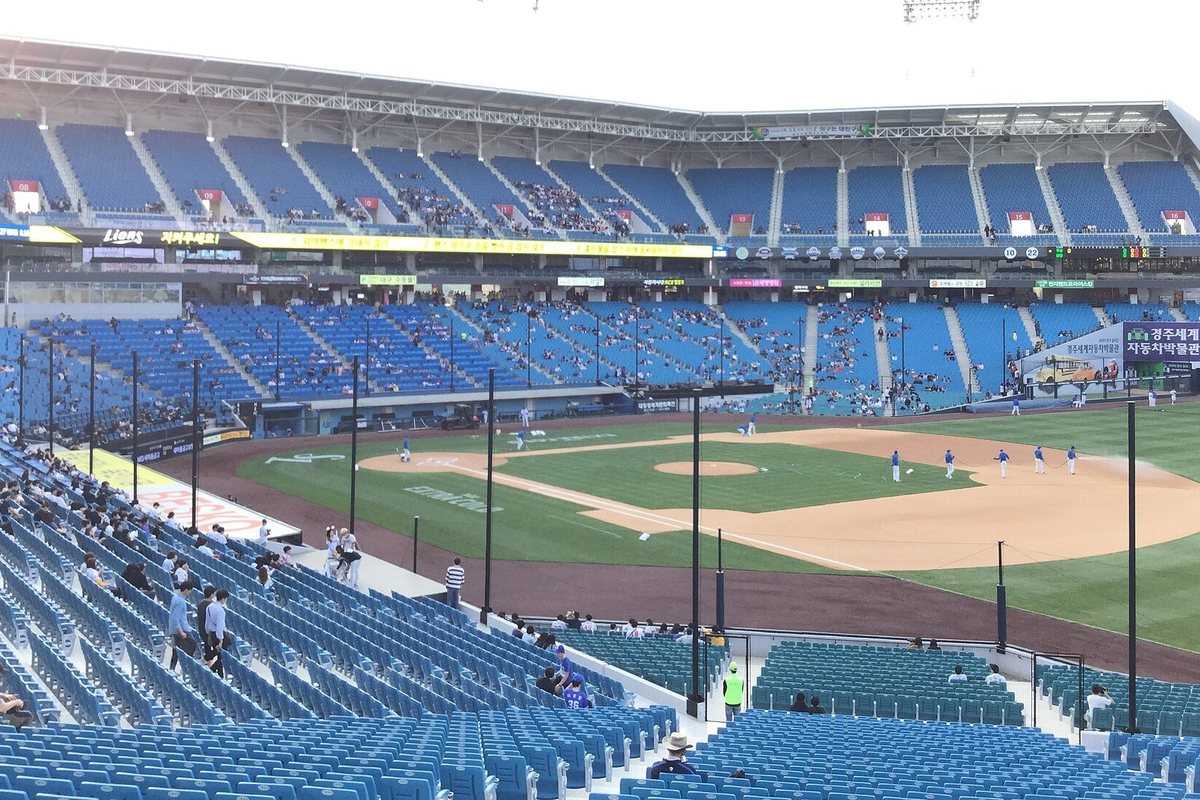
On November 8, the Samsung Lions beat the KT Wiz 12-1 in Game 5 of the Korean Series. After losing Game 1, Samsung won four straight to take the series 4-1.
It is Samsung's first title since 2014 and its ninth overall. It is also the first title won at Daegu Samsung Lions Park, which opened in 2016. Koo Ja-wook was named series MVP after going 10 for 20 in five games.
KT finished first in the regular season at 90-49-5, a .647 winning percentage, eight games ahead of second-place Samsung (83-58-3).
02How often does the top team win?
Using official KBO records, we matched the regular-season leader with the eventual champion for every season played as one league: 1989-1998 and 2001-2025, 35 seasons in all. The split-season 1980s and the two-league years of 1999-2000 are left out.
In those 35 seasons, the regular-season leader lost the Korean Series only five times: Binggrae in 1989 and 1992, Samsung in 2001 and 2015, and Doosan in 2018. The other 30 times, the top team won. That is about nine in ten.
Every upset came from a team that finished second or third. The widest gap was in 2018, when SK beat a 93-win Doosan team it had trailed by 14.5 games. In 2001, a third-place Doosan team that barely topped .500 at .508 beat Samsung, which had finished 13.5 games ahead.
KT is the first regular-season leader to miss the title since Doosan in 2018. Its .647 mark is the second-best among leaders who lost, after Binggrae's .651 in 1992. The eight-game gap between the two teams was smaller than in most past upsets.
03Why first place helps
The biggest reason is the stepladder playoff. The first-place team goes straight to the Korean Series. The second-place team starts in the playoff round, the third in the semi-playoff, and the fourth and fifth in the wild card game. The lower a team finishes, the more games it plays to get there.
Short series often turn on two or three good starting pitchers. Teams coming up the ladder have already used their aces and start the final tired. The top team rests, resets its pitching and waits.
It also gets more home games. In the best-of-seven final, the top team hosts Games 1, 2, 6 and 7. Above all, it was the most consistent team over 144 games.
04What was different this year
The series began as usual. Samsung played Game 5 of the playoff against KIA on November 1 and had one day off before the final. Many said its pitchers were worn out, and KT won Game 1.
Then the series turned. Samsung won four straight from Game 2. In Game 5, starter Won Tae-in pitched five innings and Chris Pedeck four, finishing the game with just two pitchers.
KT finished its regular season in early October and went more than three weeks without a real game before the final. Every year, people argue that a long break dulls a team's timing. Yet over 35 seasons, top teams with the same break mostly won. The records alone cannot say whether rest helps or hurts.
05Things to keep in mind
Thirty-five seasons is a small sample. A Korean Series lasts seven games at most, so an injury or one or two games can swing the result.
The playoff format has also changed several times. The wild card game began in 2015, when the league grew to ten teams. The top team's edge has not been the same in every era.
06What comes next
Over these seasons, Samsung is the third second-place team to win the title, after Haitai in 1989 and SK in 2018.
When a dominant leader like KT loses, the debate over whether the top team rests too long returns. How to protect the value of first place has been a question the KBO weighs each time it changes the playoff format.